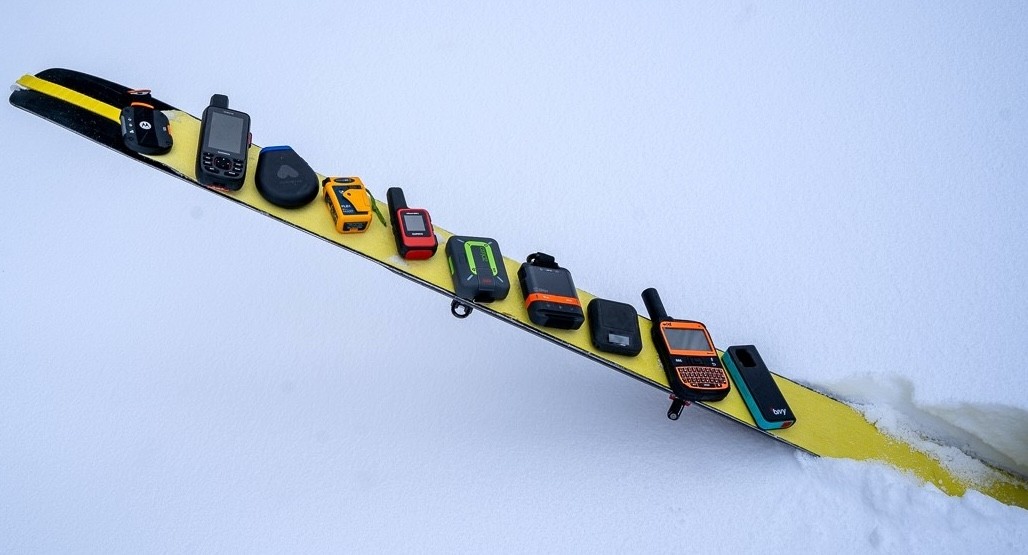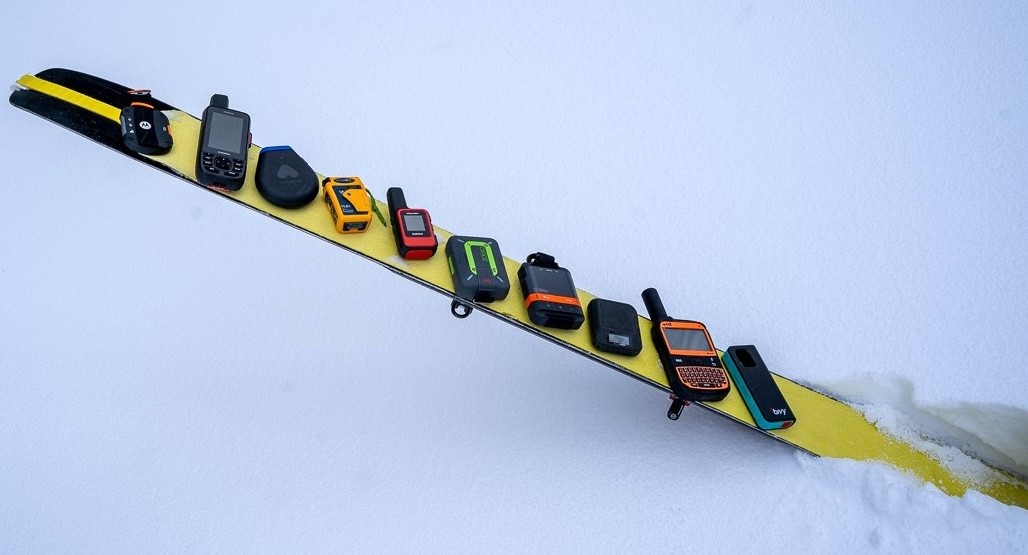

POST #7 below may be a contributing factor in your decision making process as it discusses what many articles ignore.
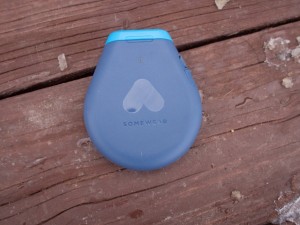
There is a new kid on the block this year from Motorola, actually arrived on the market during 2023. Looks like it might be too early to adopt it, some of the tests look like its ability to reach a signal are questionable, but the concept shows promise. The new device is from Motorola and it does not use either the Globalstar (SPOT) or the Iridium (Garmin, Zoleo, BivyStick, etc) satellites. The tiny new Motorola devices reaches out to multiple satellites from both Inmarsat and Echostar, at least in theory, but it didn't rank in the Top 5 so you need to go article at the link below.
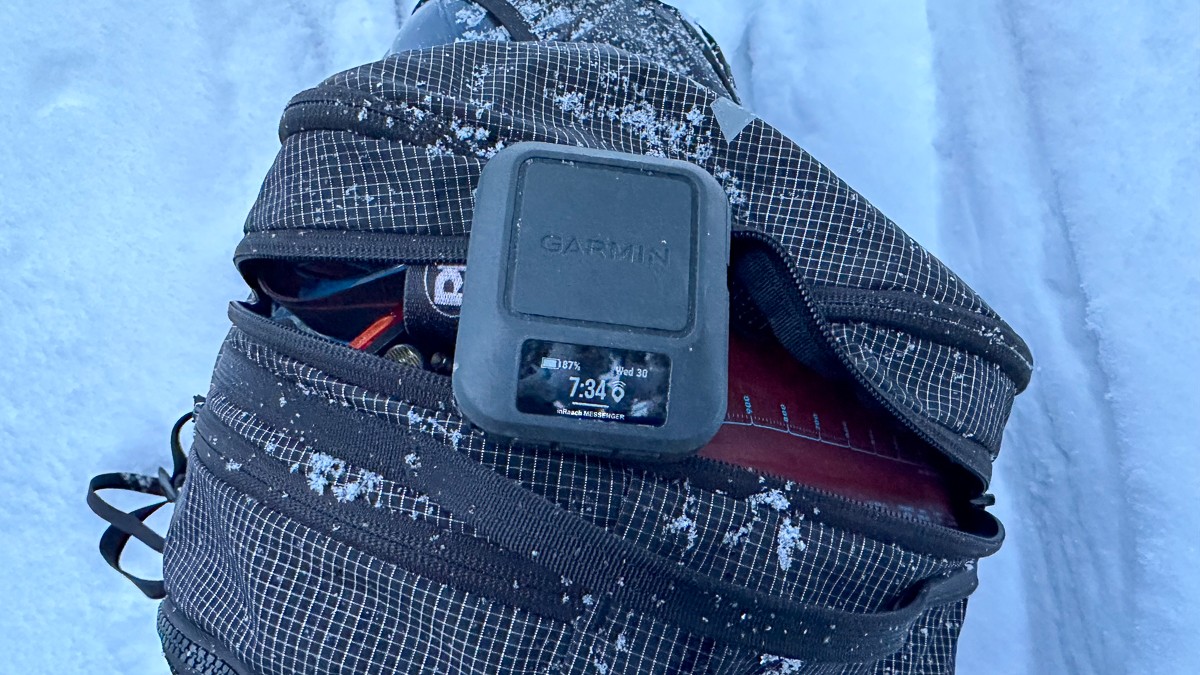
Garmin also has a new device, the Messenger, which seems to rank in the Top 5 in all reviews. The Garmin inReach Mini was upgraded to the Mini2 and that is an improved version of a favorite top pick, which replaces the Mini at the top of most lists.
SWITCH BACK TRAVEL has a long article that covers more than the top 5, you can follow the link below for the full article.

 www.switchbacktravel.com
From the folks at SWITCH BACK TRAVEL the top 5:
There is a new kid on the block this year from Motorola, actually arrived on the market during 2023. Looks like it might be too early to adopt it, some of the tests look like its ability to reach a signal are questionable, but the concept shows promise. The new device is from Motorola and it does not use either the Globalstar (SPOT) or the Iridium (Garmin, Zoleo, BivyStick, etc) satellites. The tiny new Motorola devices reaches out to multiple satellites from both Inmarsat and Echostar, at least in theory, but it didn't rank in the Top 5 so you need to go article at the link below.
Garmin also has a new device, the Messenger, which seems to rank in the Top 5 in all reviews. The Garmin inReach Mini was upgraded to the Mini2 and that is an improved version of a favorite top pick, which replaces the Mini at the top of most lists.
SWITCH BACK TRAVEL has a long article that covers more than the top 5, you can follow the link below for the full article.
Switchback Travel | Best Satellite Messengers of 2025
For emergency use or simply keeping in touch while in the backcountry, we break down the top satellite messengers on the market
www.switchbacktravel.com
From the folks at SWITCH BACK TRAVEL the top 5:
Best Overall Satellite Messenger
Category: Two-way
Weight: 3.5 oz.
Satellite network: Iridium
What we like: Lightweight, great battery life, and fully functional as a standalone device.
What we don’t: Larger upfront cost than the options below.
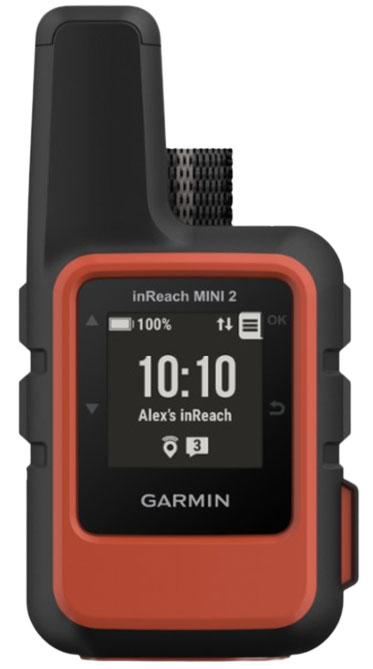
Most backcountry enthusiasts are looking for a streamlined, long-lasting satellite messenger that enables them to communicate from the comfort of their smartphone, and the Garmin inReach Mini 2 puts it all together better than most. At just 3.5 ounces, the Mini is one of the lightest devices here, but it’s also among the most capable. You get connection to the Iridium satellite network (widely accepted as the most reliable coverage), an impressive battery life, and a small display and relatively easy-to-learn interface that keep the Mini fully functional even if your smartphone bites the dust. Tack on features like weather forecasting, location tracking and sharing, and maps and navigation via the Garmin Explore app, and the Mini 2 is the full package for most backcountry-goers.
Compared to the first-gen Mini, the Mini 2 offers an improved battery life, expanded storage, higher resolution display, connection with a greater variety of satellite systems, and a more powerful USB-C connection. And with a recent firmware update, it's also compatible with Garmin’s new Messenger app for seamless communication between satellite, Wi-Fi, and cellular networks—a great feature for those who frequently move in and out of service, including thru-hikers, international travelers, and those who live in rural areas. It’s worth noting that unlike many offerings below, the Mini 2 can be used without a smartphone, which is a nice safety measure to have if your phone malfunctions or loses power. It’s the complete package for most, and it’s for good reason that we see the InReach Mini 2 being used in the field more than any other device here.
Best Budget Satellite Messenger
Category: Two-way
Weight: 5.3 oz.
Satellite network: Iridium
What we like: A two-way messenger for just $200; messages can be up to 900 characters long.
What we don’t: Heavy and bulky; limited data plans.
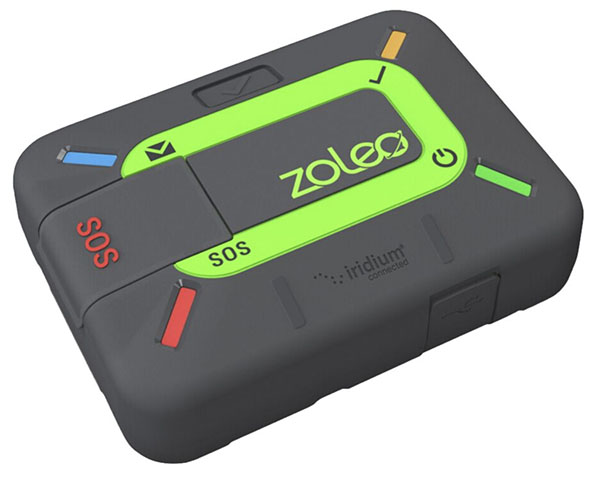
Zoleo's satellite communicator is an appealing budget pick that manages to pack in a functional array of capabilities that belie its $200 price tag. Like the devices above, you get two-way messaging via a smartphone app, as well as unlimited location tracking and sharing, weather forecasts via AerisWeather, connection to the Iridium satellite network, and SOS support from GEOS (the standard bearer for search and rescue coordination). The app also allows messaging over cellular and Wi-Fi networks, making it easy to dip in and out of the wilderness with minimal gaps in communication. All told, for half the price of the inReach Mini 2 above, the Zoleo packs quite the punch.
There are some tradeoffs to opting for such a budget-oriented model, and the most notable is the Zoleo's fairly bulky build—at 5.3 ounces, it’s considerably heavier and less sleek than the devices above. What’s more, unlimited check-ins and location tracking aren’t included in the standard plans (they cost an extra $6/month), and the Zoleo app does not feature maps and navigation. Finally, unlike the competition, Zoleo charges a $4/month suspension fee, and its plans are fairly limited (you don't get the option of saving with an annual plan). But for just $150 at the time of publishing, the Zoleo is a pretty impressive value, and penny pinchers will especially appreciate that you can pack 900 characters into each message (compared to Garmin’s 160).
Best Satellite Messenger for Organized Groups
Category: Two-way
Weight: 3.5 oz.
Satellite network: Iridium
What we like: Inexpensive start-up price and helpful GroupTrack feature.
What we don’t: Unrefined app and expensive pay structure.
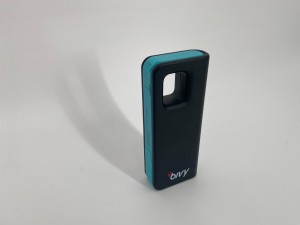
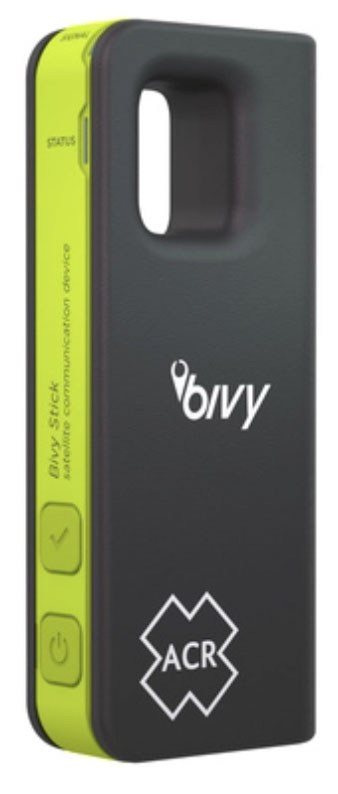
Another solid satellite messenger offering is the Bivy Stick, from Salt Lake City-based ACR Electronics. In many ways, this device functions very similarly to the Zoleo above: Lacking a screen, it operates in conjunction with a smartphone app to send and receive messages (via satellite, Wi-Fi, or cellular networks), receive weather forecasts, share your location, and more. It’s also a great tool for recreational groups or off-the-grid camps: The GroupTrack feature allows easy communication between devices in the field, along with a helpful tracking tool for those connected to the internet back at basecamp (keep in mind this service will cost you a premium at $55/month, per device). And at $300, it’ll save you $100 over the upfront cost of the inReach Mini above, too.
All that said, we’ve found the Bivy Stick to be a little disappointing in practice—the app is very busy and unrefined, and the device often was slower to send and receive messages when tested back-to-back with the Garmin. What’s more, Bivy’s subscription will cost you more to start up than other plans, with a minimum 3-month commitment to the Plus Plan at $30/month or higher. But if the GroupTrack function appeals to you, the Bivy Stick will certainly get the job done.
Best of the Rest
Category: Two-way
Weight: 4 oz.
Satellite network: Iridium
What we like: Double the battery life of the inReach Mini 2; sleek shape is great for remote frontcountry use.
What we don’t: Tiny screen makes standalone use difficult.
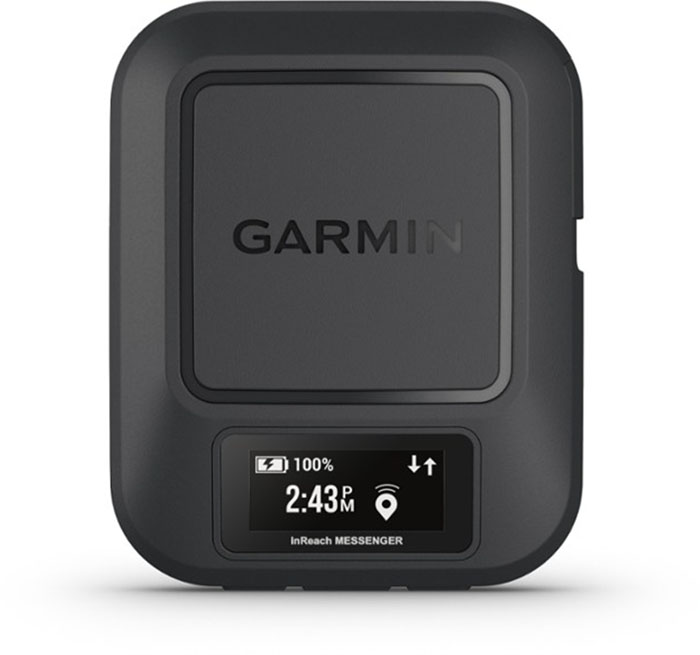
Garmin has long been the largest innovator in the satellite messenger space, and they’re still at it with the release of their inReach Messenger. The Messenger was released along with the Messenger app (yes, another app from Garmin), which works with Wi-Fi, cellular, and satellite networks to provide seamless messaging for those who dip in and out of service. What’s more, the device offers about twice the battery life of the already impressive inReach Mini 2, and can also be used as a power bank to charge your smartphone or other electronics (of course, take care with this feature, as you don’t want to drain the Messenger).
Since the release of the Messenger, Garmin has updated the Mini 2’s firmware, which is now compatible with the Messenger app as well for seamless messaging across networks. In other words, the two inReach devices offer largely the same feature sets. That said, the Messenger is intended more for remote frontcountry use: The flat shape will be more at home on the dash of a vehicle or boat than hanging from a backpack, and the tiny screen won’t be an issue when you have your smartphone charged and ready, too (you can type on the Messenger, but the screen is miniscule). And for $100 less than the Mini 2, we don’t blame you if you bring it along on backcountry adventures too (the increased battery life is a major bonus). All told, the newest inReach is a great addition to the lineup, giving devices like the Zoleo and Bivy Stick above a true run for their money.
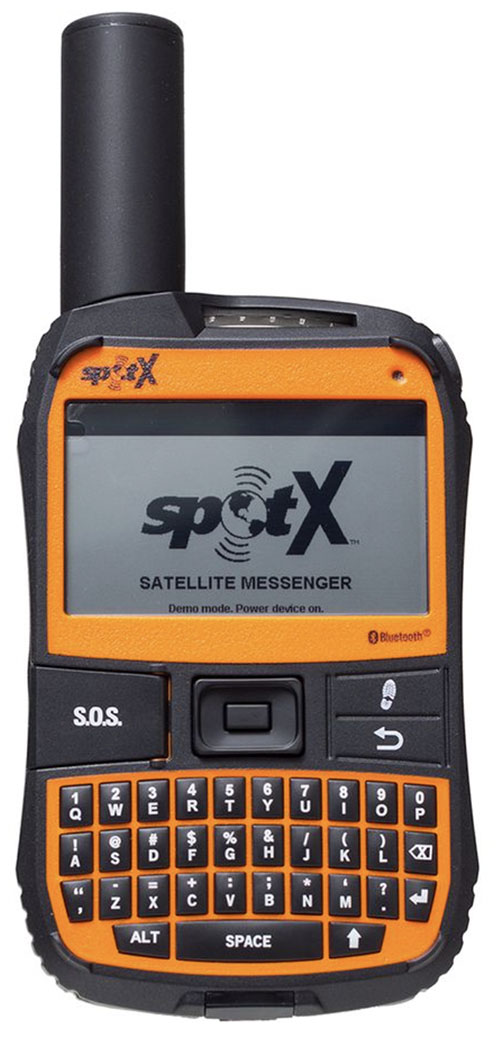
5. SPOT X ($250)
Category: Two-way
Weight: 7 oz.
Satellite network: Globalstar
What we like: An easy to use standalone device with a full QWERTY keyboard.
What we don’t: Heavy, sticky keys, and Globalstar’s coverage isn’t as comprehensive as Iridium’s.
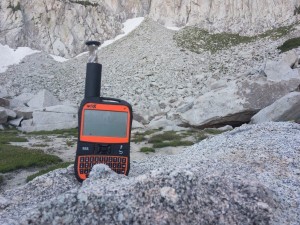
SPOT devices were made famous (or infamous) early on for their implication in accidental SOS calls and non-emergent rescue initiations, but they’ve come a long way since their beginnings in 2007. Their X here is a two-way messenger most similar to the Garmin inReach Mini above in terms of design and features. Unlike the Mini, however, the X boasts a full QWERTY keyboard, meaning you can type messages, navigate between waypoints with the built-in compass, and scroll through text chains without the need for a smartphone. And along with the SOS button, you also get the option of SPOT’s S.O.V. (“Save Our Vehicle”) feature, which sends your alert out to Nation Safe Drivers for timely vehicle assistance (additional subscription required)—all for $150 less than the Mini.
However, after using the SPOT X as our primary satellite messenger this past summer, we hesitate to give it glowing reviews, especially given the impressive competition above. For one, the keys are sticky (our “a” key was almost worthless) and the computer slow, which makes for onerous typing. To be fair, the X does pair with a smartphone, but at 7 ounces for the device alone, that’s a fairly heavy combination. Second, SPOT uses the Globalstar satellite network rather than Iridium, which proved to be noticeably slower and less reliable in our testing (you can see a coverage map here). And to make matters worse, SPOT’s subscription fees are some of the more expensive available (you'll pay about $80 just to start up a monthly flex plan). All told, the SPOT X will likely get the job done when you need it, but it simply doesn’t measure up against the more refined messengers above.