
-
Please be sure to read the rules and adhere to them. Some banned members have complained that they are not spammers. But they spammed us. Some even tried to redirect our members to other forums. Duh. Be smart. Read the rules and adhere to them and we will all get along just fine. Cheers. :beer: Link to the rules: https://www.forumsforums.com/threads/forum-rules-info.2974/
You are using an out of date browser. It may not display this or other websites correctly.
You should upgrade or use an alternative browser.
You should upgrade or use an alternative browser.
Military Pics / Photos
- Thread starter Doc
- Start date


There is a sticker with her picture on it in every urinal in every men's room in every VFW and American Legion Post that i have ever been in all across this land.YES. Hanoi Jane is a Traitor!!!!!!!! And will always be considered a traitor in my book.

Boy, that's an early model with the minigun in the center of the front.
It's also missing 'that smile'.
 :
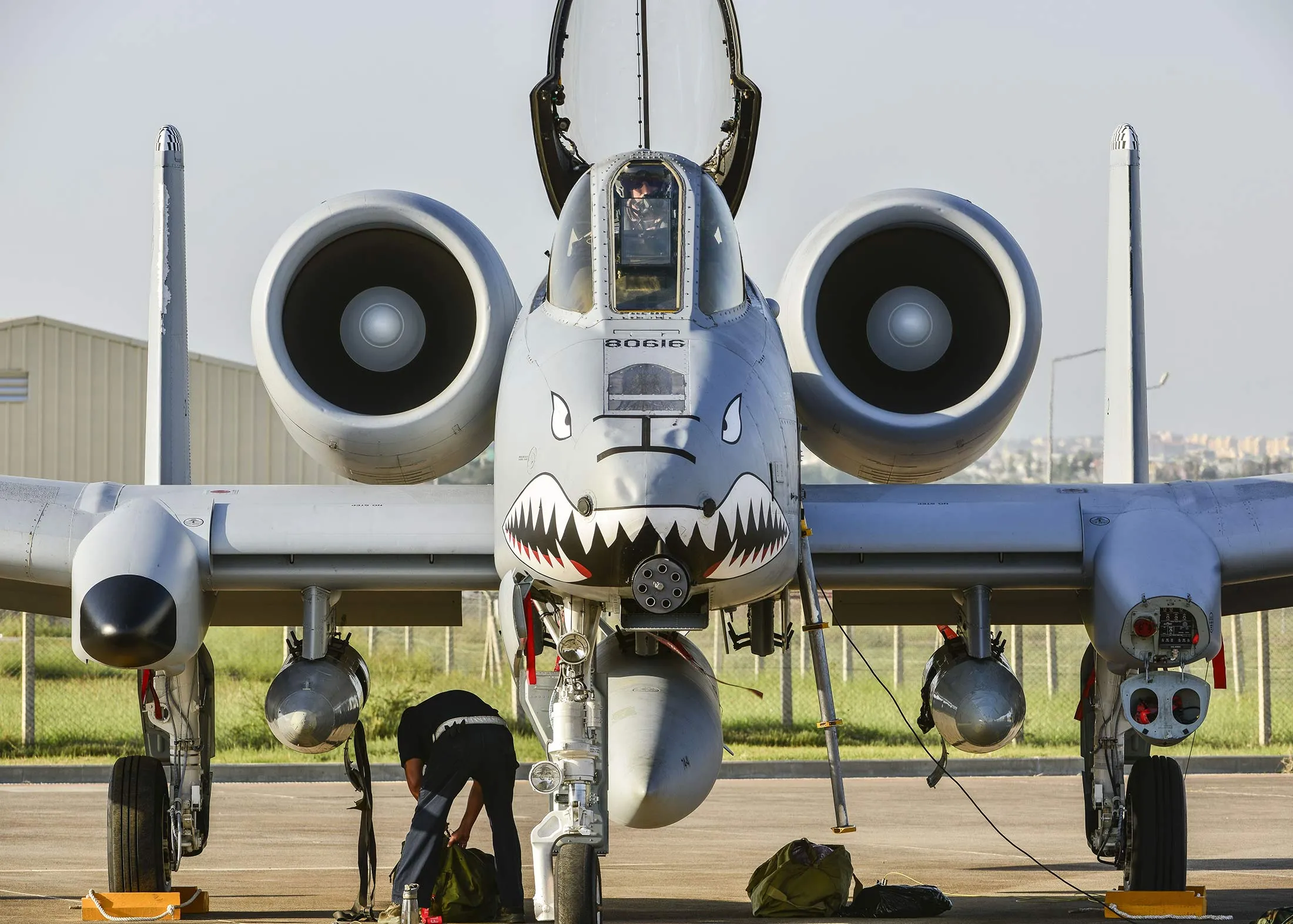
They don't play nice.

... Have I mentioned lately that I am an A-10 junkie?

Last edited:

Boy, that's an early model with the minigun in the center of the front.
It's also missing 'that smile'.
They don't play nice.
... Have I mentioned lately that I am an A-10 junkie?
You are not alone.
Last edited:


The 18-hour submarine day was introduced by the Navy in the 1960s to solve a specific physical limitation: nuclear-powered submarines could stay submerged for months, but human attention spans could not. Leadership capped watch shifts at 6 hours, believing shorter shifts would keep sailors sharply focused while monitoring complex nuclear reactors. Because submarines are small and cramped, the crew could only be divided into 3 watch teams. Rotating these 3 teams through 6-hour shifts created a repeating 18-hour loop.
The Physical Cost of Permanent Jet Lag
For nearly 45 years, this mechanic forced a brutal biological distortion. A sailor’s 12 hours off watch were strictly divided: 6 hours for equipment maintenance, mandatory training, and meals, leaving just 6 hours for sleep. Because the loop was only 18 hours long, sleep times rotated backward by 6 hours every single cycle. A sailor sleeping at midnight on Monday would find themselves forced to sleep at 6:00 PM on Tuesday, and 12:00 PM on Wednesday.
Without daylight to set a baseline rhythm, sailors were effectively subjected to 6 hours of artificial jet lag every calendar day. Decades of medical data eventually proved that trying to beat natural circadian cycles caused chronic sleep deprivation, profound fatigue, and compromised operational alertness during monotonous deep-sea deployments.
The 2014 Circadian Revolution
Following extensive testing by the Naval Submarine Medical Research Laboratory, the Navy authorized a fleet-wide transition away from the 18-hour loop between 2013 and 2014. The fix required a total shift in mindset: instead of modifying the day to fit the shift, they modified the shift to fit the 24-hour day.
The Navy maintained the same 3-section crew rotation but stretched the blocks of time. Under the new standard, watch shifts increased from 6 hours to 8 hours. Consequently, the time off watch expanded from 12 hours to 16 hours.
The Reality of the Modern Standard
The shift to a standard 24-hour day immediately stabilized the crew's internal biological clocks. Sailors on a modern submarine now stand watch and go to sleep at the exact same time every single day. The extra 16 hours off watch provides a protected, predictable 8-hour sleep window, leaving another 8 hours entirely free for maintenance, drills, and physical training. Fleet reports following the transition showed an immediate surge in crew morale, a drastic drop in chronic fatigue, and vastly improved mission execution across the submarine force.

That's the way it was back then. I never heard my grandfather's, dad or brother ever talk about their time in the service. They did their job, then came home and got on with their lives. It's way different now days.
Last edited:
My Dad was a lieutenant commander in the United States Navy, and had two uncles who also served. They talked about some stuff, but not a lot.That's the way it was back then. I never heard my grandfather's, dad or brother ever talk about their time in the service. They did their job, then came home and got on with their lives. It's way different now days.
I had a cousin Kenny who was about 10 years older than me.
When he came back from Vietnam, he wasn't the same person.
My Dad tried to take him under his wing, but he ended up turning to alcohol and fell asleep one night in his tiny apartment with the bed burning.
My Mother cried for months after that.
Old military truism - those who talk the loudest have usually done the least.That's the way it was back then. I never heard my grandfather's, dad or brother ever talk about their time in the service. They did their job, then came home and got on with their lives. It's way different now days.
I don't know much, but I know one grandfather was on a ship in Pearl Harbor when the Japs attacked, and his first ship was sunk. Later he was on another ship that was also sunk. My other grandfather was with Patton in North Africa and Europe, I think. My dad lied about his age and joined the Marine Corp at 16, late WW11 and later Korea. My brother was in Vietnam Nam era.Old military truism - those who talk the loudest have usually done the least.
I wish I knew more, but they never talked.
Most of us don’t talk about it because we didn’t really do extraordinary things.
And unless you’ve actually been through a war, whether you were infantry or support, you just wouldn’t understand.
My daughter has been going with me to my annual Army infantry division reunions and she’s learning a lot when we sit around in the hospitality room BS’ing with each other about days gone by.
We can, and do, talk about the war with each other.
This September will be my daughter’s sixth reunion and my 19 year old granddaughter’s third.
I’ll be renting an SUV and we’ll be driving to Green Bay.
I’ll post pictures.
This was last year in Kansas City

True story. VVA Veteran magazine had a good article on him last year.
Yes indeed.
The Brotherhood NEVER fades.
To me it matters not if my Brother or Sister was wartime or peacetime; on land, sea, or air; Stateside or combat; Soldier, Sailor, Marine or Airman; none of that is relevant. We are Brothers and Sisters, period!
THIS is why I thank Jesus that He allowed me to experience not only the US military, but to go war and return. Nothing else in my life really compares. I don't think that civilians would ever understand.
Each September the veterans of the 5th Infantry Division, US Army hold a reunion that lasts 4 days. This year it's in Green Bay. I'll be with the guys I was in Vietnam with. This will be the fifth one my daughter has attended with me, and the third for my granddaughter.
My wife has never been able to attend, one or the other of us has to always be home to care for the animals.
I'll post pictures here for sure.
This was last year in Kansas City, MO.
We are the oldest continuously active military unit organization in the country.
Formed in Luxembourg in 1919 by our WWI troops.

THANK YOU! Thank you @rice paddy daddy , and ALL of our veterans! Some of us appreciate you more than you'll ever know!!
Duty, Honor, Country.
Thank you Pearl, for being an American worth fighting for.THANK YOU! Thank you @rice paddy daddy , and ALL of our veterans! Some of us appreciate you more than you'll ever know!!
And I really mean that.

I had the privilege of serving with Col Jerry Berry.
 goefoundation.org
He was the pilot that flew the Ambassador out of Vietnam signaling the end of USA involvement in Vietnam.
Berry, Gerald L. | Gathering of Eagles Foundation
goefoundation.org
He was the pilot that flew the Ambassador out of Vietnam signaling the end of USA involvement in Vietnam.